
Ribeye Revelation - Pan-Searing Perfect Texas Grass Fed Steak
Master the art of pan-searing ribeye steak with this complete guide to cooking grass fed ribeye steak. Learn how to cook ribeye steak to perfection using a cast iron skillet with restaurant-quality results at home.
COOKING GRASS FED BEEFRECIPES & COOKING
Troy Patterson
11/23/202512 min read
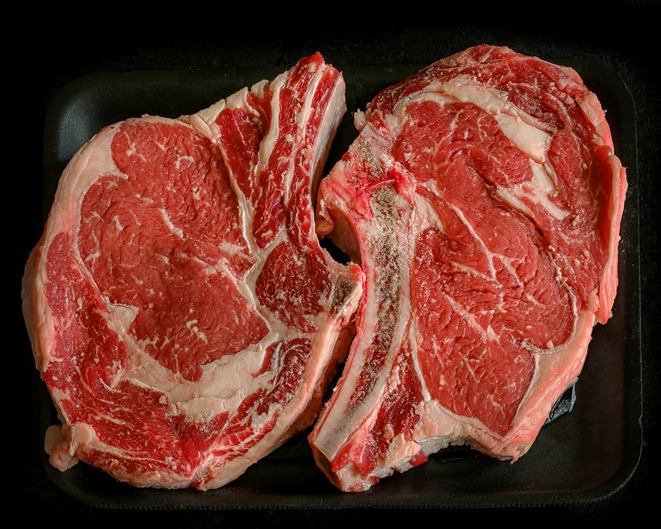
Most people walk right past ribeye steak at the meat counter, convinced it's too fancy for a weeknight dish. I get it. But here's what changed my mind: a steak dinner at a friend's house where we watched him transform a grass fed ribeye steak into the one of the best beef steaks I had ever tasted using nothing more than a generous coating of salt and pepper.
No marinade. No complicated technique. Just high heat, quality meat, and about eight minutes of actual cooking time. That evening convinced me that ribeye doesn't have to be reserved for special occasions or restaurants.
Why Ribeye Steak Is Worth Your Attention
The beef ribeye steak sits at the sweet spot between tender and flavorful. Cut from the rib primal (ribs 6 through 12), this boneless steak has enough marbling to stay juicy without needing babying. When you're working with Texas grass-fed ribeye steak raised on native pastures, you're getting meat from cattle that graze year-round, giving it a rich flavor profile that grain-finished beef just can't match.
The fat in grass fed and grass finished beef is different too. Higher in omega-3 fatty acids and conjugated linoleic acid (CLA), it melts at a lower temperature than grain-fed fat. This means you need to adjust your cooking approach slightly, but the payoff is a juicy steak that's both more nutritious and full of flavor.
Understanding Ribeye Cap Steak and Structure
The ribeye actually contains two distinct muscles: the longissimus dorsi (the eye) and the spinalis dorsi (the cap). That cap is the most prized part of the steak, with intense marble and a buttery texture that even beef skeptics love. When you're buying ribeyes, look for cuts where the cap wraps generously around the eye—that's where the magic happens.
Selecting Quality Texas Grass Fed Beef
Your cooking technique doesn't matter if you start with subpar beef. Here's what to look for when sourcing grass fed beef ribeye:
Thickness matters more than you think. Ask your butcher for steaks cut at least 1.5 inches thick. Thinner cuts overcook before you can develop a proper crust. Thicker ribeye steaks give you more control and a better ratio of crust to interior.
Color should be deep red, not bright pink. Grass-fed beef is typically darker than grain-finished cattle because of higher myoglobin content. This is normal and desirable. The fat should be slightly yellow from beta-carotene in the pasture-raised animal's forage diet.
Look for beef raised without added hormones or antibiotics. Quality farmers and ranchers who raise grass fed and finished beef will provide transparency about their practices from pasture to plate.
The Science Behind Pan-Searing Ribeye Steak
When you sear a steak, you're triggering the Maillard reaction—the chemical process that creates hundreds of new flavor compounds through the interaction of amino acids and reducing sugars at high heat. This is why a well-seared ribeye tastes fundamentally different from boiled beef, even though they're the same cut.
For ribeye steak medium-rare temp, you're aiming for an internal temperature of 130-135°F. But here's the trick: you need to account for carryover cooking. The steak will continue cooking after you remove it from the pan, rising another 5-10 degrees during the rest period.
Why Cast Iron Skillet Works Best
A cast iron pan holds heat better than any other pan in your kitchen. When you place a cold steak on a thin stainless steel pan, the temperature drops significantly. Cast iron maintains its heat, ensuring continuous searing rather than steaming. If you don't have cast iron, a thick stainless steel skillet with an aluminum core works second-best. Avoid nonstick pans—they can't handle the heat required for proper searing.
How to Cook Ribeye Steak: The Essential Recipe
This ribeye steak recipe uses just three ingredients and one pan. I've tested at least fifteen variations, and this simple approach consistently delivers the best beef every time.
Ingredients
2 grass fed beef ribeye steaks (1.5-2 inches thick, about 12-16 oz each, or two 8 oz portions for lighter appetites)
Coarse sea salt
Freshly cracked black pepper
2 tablespoons grass fed butter or beef tallow (optional for basting)
2 sprigs fresh thyme (optional)
2 cloves garlic, smashed (optional)
Instructions
1. Bring steaks to room temperature. Remove ribeye from refrigerator 45-60 minutes before cooking. This isn't just tradition—cold steaks cook unevenly. The outside overcooks while the inside stays cold. Pat steaks completely dry with paper towels. Surface moisture prevents browning.
2. Season generously. Use more salt than feels comfortable. A good rule: about 3/4 teaspoon of coarse salt per pound of steak. Season both sides and the edges. Add freshly cracked pepper. Some people salt hours ahead (dry brining), but for ribeye's thickness, immediate seasoning works fine.
3. Heat your pan properly. Place cast iron skillet over high heat for 5 minutes. The pan should be smoking slightly—this isn't an exaggeration. Drop a water bead on the surface. It should instantly ball up and roll around. That's your signal.
4. Sear the first side. Add steak to the dry pan (no oil yet). You should hear an immediate, aggressive sizzle. Don't touch it. Don't press it. Don't peek. Let it sit undisturbed for 4-5 minutes for a 1.5-inch steak, 5-6 minutes for a 2-inch steak. A proper crust releases naturally—if it sticks, it's not ready.
5. Flip once. Use tongs, not a fork (piercing releases juices). The first side should be deep mahogany brown with golden edges. Sear the second side for 3-4 minutes for medium-rare, 4-5 minutes for medium.
6. Optional butter basting. In the last minute of cooking, add 2 tablespoons of butter or beef tallow to the pan along with thyme sprigs and smashed garlic. Tilt the pan and spoon the foaming butter over the steak repeatedly. This adds richness and helps cook the top surface.
7. Check temperature. Insert a meat thermometer into the thickest part of the steak horizontally. For ribeye steak medium rare: 125-130°F in the pan (it will rise to 130-135°F during rest). For medium: 135-140°F in the pan.
8. Rest for 5-10 minutes. Transfer steak to a cutting board and tent loosely with foil. Rest for 10 minutes for a 1.5-inch steak, 15 minutes for a 2-inch cut. This allows juices to redistribute. Cut too early and those juices run onto the board instead of staying in your steak.
Cooking Ribeye Steak in Oven (Alternative Method)
For steaks over 2 inches thick, consider the reverse sear method: Start in a low oven (250°F) until internal temperature reaches 115°F, then finish with a hard sear in your screaming hot cast iron. This gives you more control and an even edge-to-edge medium-rare.
The standard sear-then-oven method also works: sear both sides for 2 minutes each, then transfer the whole skillet to a 400°F oven for 4-6 minutes until it reaches your target temperature.
Grass Fed vs Grain Fed: What Changes
Grass-fed and finished ribeye requires slight adjustments to standard cooking methods. The lower fat content and different fat composition from cattle that graze exclusively on pasture means it cooks faster and can dry out more easily if overcooked.
Lower your target temperature by 5 degrees. What would be perfect medium-rare in fed grain beef might taste overdone in grass-finished. Aim for 125°F instead of 130°F.
Watch your timing closely. Grass fed ribeye typically cooks 15-20% faster than grain-fed. A steak that would take 5 minutes per side grain-fed might only need 4 minutes per side when grass fed.
Don't skip the rest period. This matters even more with leaner grass-fed beef. The rest period allows muscle fibers to relax and reabsorb juices.
Ribeye Steak Nutrition: What You're Actually Eating
A 6 oz serving of grass fed ribeye provides approximately:
340 calories
44g protein (high-quality, complete amino acid profile)
17g fat (lower than grain-fed ribeye)
Higher omega-3 fatty acids (about 3-5 times more than grain-fed)
Significant amounts of B vitamins, iron, zinc, and selenium
Higher levels of conjugated linoleic acid (CLA)
The ribeye steak calories increase with size, but the nutritional density makes it worth the splurge. This is nutrient-dense food, not empty calories.
Best Ribeye Steak Seasoning Beyond Salt and Pepper
While salt and pepper are my go-to for ribeye, sometimes you want to change things up:
Coffee-Cocoa Rub: Equal parts finely ground coffee, unsweetened cocoa powder, and ancho chili powder with salt creates a deep, complex crust. The bitterness balances ribeye's richness.
Garlic-Herb Butter: Compound butter with roasted garlic, fresh thyme, and parsley. Make it ahead and keep it in the freezer. Slice a round to melt over your hot steak.
Best Seasoning for Ribeye Steak on the Grill: Keep it simple. Salt, pepper, and a light brush of beef tallow before grilling. Too many spices burn over high heat and taste acrid.
How to Grill a Ribeye Steak (When You Want Fire)
Grilling ribeye follows similar principles to pan-searing but with a few adjustments for achieving that delicious char:
1. Two-zone fire setup. Create a hot zone for searing and a cooler zone for gentle cooking. This gives you insurance against flare-ups from ribeye's rich fat.
2. Oil the grates, not the steak. Use a paper towel dipped in beef tallow and grill tongs to oil your grates. This prevents sticking without adding excess fat that causes flare-ups.
3. Sear over direct heat for 3-4 minutes per side. Use the same "don't touch it" rule as pan-searing. Let the crust develop and release naturally. For prime-grade cuts with exceptional tenderness, watch timing carefully.
4. Move to indirect heat to finish. If your ribeye hasn't reached temperature after searing, move it to the cooler zone and close the lid until it hits your target.
5. Manage flare-ups carefully. Ribeye's fat will cause flames. This is normal. Move the steak temporarily to the cool zone if flames are constant. Brief flare-ups add flavor; sustained flames burn your meat.
Reverse Sear Ribeye Steak: Maximum Control
This method gives you a wall-to-wall perfect doneness with a crispy crust:
1. Start low and slow. Place ribeye on a wire rack over a baking sheet in a 225°F oven. Cook until internal temp reaches 115°F (about 30-40 minutes for a 1.5-inch steak).
2. Rest briefly. Remove from oven and let sit for 10 minutes. This cooling allows the surface to dry, crucial for the next step.
3. Sear hard and fast. Heat your cast iron until smoking. Sear 60-90 seconds per side. The interior is already at temperature, so you're just building crust.
4. Serve immediately. With reverse sear, you rest before searing, so the steak is ready to eat right away.
Sous Vide Ribeye Steak: The Foolproof Method
Sous vide ribeye guarantees perfect doneness every time, though you sacrifice some of the traditional steak-cooking experience:
1. Set your water bath to 129°F for medium-rare, 135°F for medium.
2. Season and seal. Season ribeye with salt and pepper, add a sprig of thyme and a pat of butter, then vacuum seal or use the water displacement method with a zip-top bag.
3. Cook for 2-4 hours. The time range is flexible—this is sous vide's superpower. Whether you pull it at 2 hours or accidentally leave it for 4, the result is nearly identical.
4. Sear aggressively. Pat the steak completely dry (crucial), then sear in a screaming hot cast iron for 60 seconds per side. You're just building crust since the interior is already perfect.
Common Ribeye Steak Mistakes and How to Fix Them
Mistake #1: Cooking straight from the fridge. Cold steak = gray band of overcooked meat around a cold center. Solution: 45-60 minutes at room temperature before cooking.
Mistake #2: Not drying the surface. Water creates steam, preventing browning. Solution: Pat dry obsessively with paper towels right before cooking.
Mistake #3: Using too low heat. Low heat steams rather than sears. Solution: Get your pan smoking hot before the steak touches it.
Mistake #4: Moving the steak around. Every time you flip or move it, you interrupt crust formation. Solution: Set it down and walk away. Flip once.
Mistake #5: Not using a thermometer. Guessing doneness wastes expensive ribeye. Solution: Buy a good instant-read thermometer. They cost less than one ribeye and last for years.
Mistake #6: Skipping the rest. Cutting immediately releases all the juices onto your board. Solution: Mandatory 10-minute rest, tented with foil.
What to Serve with Ribeye Steak
Ribeye's richness calls for sides that provide contrast:
Simple green salad with lemon vinaigrette cuts through the fat. Nothing fancy—just crisp lettuce, good olive oil, lemon juice, and salt.
Roasted vegetables like asparagus, Brussels sprouts, or broccoli add bitter notes that complement ribeye's sweetness.
Baked sweet potato provides earthy sweetness without competing with the steak's flavor.
Sautéed mushrooms enhance ribeye's umami. Use butter, thyme, and a splash of dry red wine.
Creamed spinach is traditional for a reason—the richness matches ribeye's, creating an indulgent combination.
Storing and Reheating Leftover Ribeye
Cooked ribeye keeps for 3-4 days refrigerated in an airtight pack. To freeze for longer storage, wrap tightly in freezer paper and use within 3 months. When ready to use, thaw overnight in the refrigerator. Reheat gently to avoid turning your expensive steak into shoe leather:
Best method: Low oven. Place steak on a wire rack over a baking sheet. Warm in a 250°F oven for 15-20 minutes until heated through. This keeps the tenderness intact.
Quick method: Sliced and seared. Slice leftover ribeye thin against the grain. Quickly sear slices in a hot pan for 30 seconds per side. Use for steak sandwiches or salads.
Never use the microwave. It turns ribeye rubbery and concentrates that leftover taste.
Beyond Dinner: Other Ways to Use Ribeye
Ribeye breakfast: Slice leftover steak and serve with fried eggs cooked in beef tallow. The runny yolk creates a sauce.
Steak sandwich: Room-temperature sliced ribeye on sourdough with arugula, horseradish cream, and caramelized onions.
Steak salad: Sliced ribeye over mixed greens with blue cheese, walnuts, and balsamic vinaigrette.
Steak and eggs: The classic diner combination, but better when you use grass fed ribeye.
The Economics of Grass Fed Ribeye
Grass fed ribeye costs more than conventional beef, typically $18-28 per pound depending on your source. This prices it as a special occasion food for most families. But consider the cost per serving compared to restaurant prices:
A restaurant ribeye often runs $45-75 for a 12-ounce steak. At home, that same steak costs $13-21, even at the higher end of grass-fed pricing. Add $5 in sides and you're still looking at a $20-25 total cost for a restaurant-quality meal.
The other consideration: grass-fed ribeye's higher nutrient density means you're getting more nutrition per calorie. When factored in, the price premium shrinks.
Finding Texas Grass Fed Ribeye
Local ranchers and farm operations: Texas has hundreds of grass-fed operations where you can source directly from the cow to your table. Many sell directly to consumers. Search for "grass fed beef" plus your county name.
Farmers markets: Most major Texas cities have farmers markets where ranchers sell directly. This gives you the chance to ask questions about their process and how they raise their cattle.
Online sources: Several Texas ranches ship statewide. Texas Grass Fed Farms sources from grass-fed ranches across the state and delivers throughout Texas.
Co-ops and buying clubs: Join or form a buying club to purchase quarters or halves at reduced per-pound prices. This is often the most economical way to buy grass fed beef ribeye steak.
Why Ribeye Matters for Regenerative Agriculture
When you buy grass-fed ribeye from regenerative operations that certify their practices, you're supporting more than just your own health. Properly managed grazing actually improves soil health, increases water retention, and sequesters carbon.
The economics matter too. Regenerative ranchers need profitable markets for all cuts, not just ground beef. When you buy ribeye at fair prices from ranchers who maintain high standards from pasture through humane slaughter, you help keep these operations viable, which keeps Texas grasslands in production rather than being developed.
The Real Ribeye Revelation
Here's what I've learned after cooking ribeyes: the expensive cuts aren't necessarily the hardest to cook. In fact, ribeye is remarkably forgiving compared to leaner steaks like sirloin or round. Whether you're working with trim cuts or prime Angus beef, the principles remain the same.
That high fat content means you have to work hard to truly ruin it. Even slightly overcooked, ribeye stays juicy. Even underseasoned, it tastes good. The cut does half the work for you.
The real revelation isn't about technique. It's about ingredients. Start with well-raised Texas grass fed beef, apply high heat, and get out of the way. That's it.
My friend was right. Ribeye isn't fancy cooking—it's simple cooking with great ingredients. The kind of meal you can make on a Tuesday night when you want something better than usual but don't want to fuss.
Get your pan smoking hot. Season generously. Flip once. Rest for 5-10 minutes. That's your ribeye revelation.
Ready to experience the difference of Texas grass fed ribeye? Sign up to be notified when we start selling premium grass fed ribeye steaks.
Frequently Asked Questions
How long to cook ribeye steak? For a 1.5-inch thick ribeye at high heat: 4-5 minutes first side, 3-4 minutes second side for medium-rare. Add 1-2 minutes per side for thicker steaks.
What temperature for medium-rare ribeye? Target 130-135°F final temperature. Pull from heat at 125-130°F to account for carryover cooking during the rest period.
Do I need to marinate ribeye? No. Ribeye has enough natural flavor and fat that marinades are unnecessary. Salt, pepper, and high heat are all you need for the best ribeye steak.
Can I cook frozen ribeye? Yes, but thaw first for best results. If cooking from frozen, use the reverse sear method: start in a low oven to gently thaw and cook, then finish with a hard sear.
Why is grass fed ribeye better? Higher omega-3 fatty acids, more CLA, better mineral profile, and superior flavor from pasture-based diet. The nutritional differences are significant.
How do I reheat ribeye without drying it out? Warm in a low oven (250°F) on a wire rack for 15-20 minutes, or slice and quickly sear in a hot pan for 30 seconds per side.
Texas Grass Fed Farms
Families Deserve Food That Heals, Not Harms
© Texas Grass Fed Farms 2025. All rights reserved.